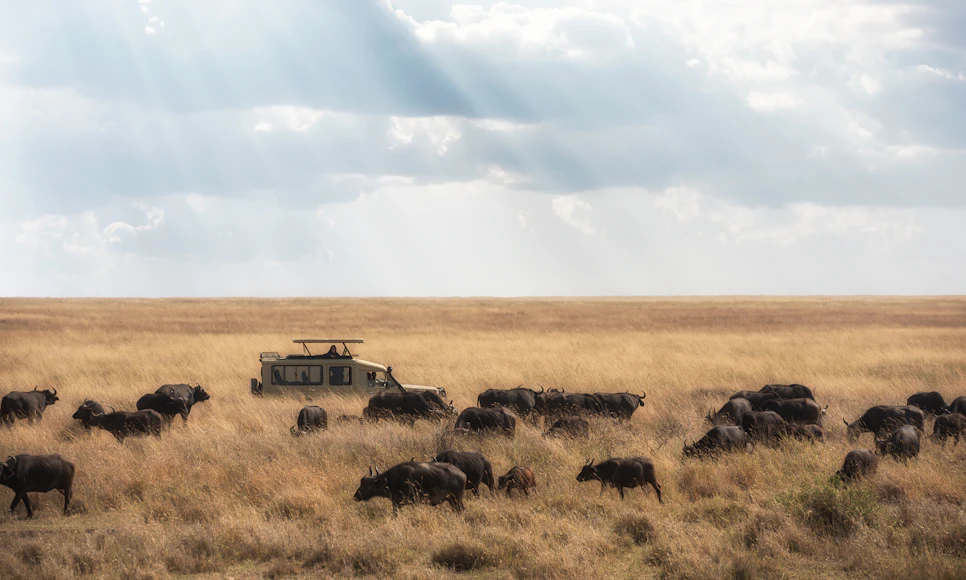
The best time to visit Tanzania depends on whether you’re planning a safari, Zanzibar, Kilimanjaro or a combination of all three.
For most first-time visitors, June to September is the easiest all-round period. These months are broadly dry across Tanzania, which usually means simpler road travel, good safari conditions and a strong overlap with Zanzibar’s main dry season.
That said, Tanzania changes a lot through the year. January and February can be especially rewarding in the Serengeti, while the greener months bring quieter parks and very different landscapes. The best time is less about finding one perfect month and more about matching the season to the trip you actually want.
Tanzania’s seasons
Tanzania does not have one single rainfall pattern. Northern Tanzania, the northern coast and Zanzibar generally have two rainy seasons: the long rains from around March to May and the short rains from roughly October to December.
Southern, central and much of western Tanzania follow a different pattern, with a more continuous wet season from around November into April or May. June through September are generally dry across the country, while January and February are relatively dry in the northern areas that have two rainy seasons.
That regional variation matters. Weather advice that works for Arusha or Zanzibar does not always apply in exactly the same way farther south.
June to September
For a straightforward first trip, this is the period I would look at first. Rainfall is generally low, roads are easier to manage and wildlife can become easier to spot as vegetation dries and animals gather around reliable water sources.
It also works particularly well if you want to finish the trip on Zanzibar. The islands’ main dry season runs from June to October, with generally pleasant conditions for beaches, sightseeing and time on the water.
July and August are popular months, so September is a good option if you want dry-season conditions without travelling right in the middle of the European summer holiday period.
October to December
October marks the transition back towards rain in much of northern Tanzania and Zanzibar. The shorter rains usually develop between October and December, although the timing and intensity vary from year to year.
That does not mean constant rain. You can still have plenty of good weather, but conditions become less predictable than they are in the core dry months. In return, landscapes become greener and some places can feel less busy.
If predictable weather matters most, June to September is easier. If you do not mind some uncertainty, October and November can still work well.
January to February
January and February are another strong period for northern Tanzania. They fall between the shorter and longer rains and are relatively dry across the country’s northern bimodal climate region.
They are also particularly interesting in the southern Serengeti, where the wildebeest calving season takes place from roughly January into March. Large herds gather on the short-grass plains and huge numbers of calves are born over a relatively short period.
For wildlife, this can be every bit as compelling as the better-known dry season.
March to May
March to May brings the main long rains to northern Tanzania and Zanzibar. The country becomes greener, but heavy rainfall can make some roads more difficult and can make safari and beach plans less predictable.
There are advantages: fewer visitors, lush scenery and often a quieter atmosphere. But if this is your first Tanzania trip and you want the easiest combination of safari and coast, I would normally choose another time of year.
Best time for the Great Migration
There is no single Great Migration season. The herds move through the Serengeti ecosystem throughout the year, following changing water and grazing conditions.
Early in the year, the main concentration is on the southern plains for calving. As the year progresses, the herds move north through the ecosystem, with the Mara River crossings associated with the northern Serengeti later in the dry-season cycle. The timing is never exact because rainfall drives the movement.
If seeing a particular part of the migration matters to you, decide what you want to see first and then choose the region and month around that. That is more useful than simply booking something marketed as “migration season”.
Best time for Zanzibar
For a simple beach holiday, June to October is the clearest choice. This is Zanzibar’s main dry-season period, with lower rainfall and generally good conditions for outdoor activities and time on the water.
January and February can also be a good option between the short and long rains, particularly if you prefer hotter weather.
Best time to climb Kilimanjaro
The most popular climbing periods are broadly June to October and December to March. April and May are usually wetter, although conditions on Kilimanjaro can change quickly at any time because of the mountain’s altitude.
If Kilimanjaro is the main reason for your trip, choose the climbing dates first and build the rest of Tanzania around them. It takes enough time and energy that it should not be treated as an extra stop.
So, when should you go?
For a first trip combining northern safari and Zanzibar, I would choose September. It sits comfortably within the dry season, works well for both wildlife and the coast, and avoids some of the uncertainty that returns later in the year.
If the Serengeti calving season is the priority, look instead at late January or February. For Kilimanjaro, June to October or December to March are the more popular windows.
Whatever month you choose, check the latest seasonal forecast before travelling. Tanzania’s rainfall patterns vary from year to year, so historical seasons are a guide rather than a guarantee.
Related guides
Best Places to Visit in Tanzania
Tanzania Travel Costs
Getting to and Around Tanzania
7 Days in Tanzania: A First-Time Itinerary (coming later)