From the Serengeti and Ngorongoro to Zanzibar and Kilimanjaro, these are the places worth considering for a first trip to Tanzania.
Tanzania has enough variety that two trips to the country can look completely different. You can spend a week on safari, climb Africa’s highest mountain, explore the streets of Stone Town or build the entire trip around the Indian Ocean.
For most first-time visitors, the challenge is not finding places to go. It is deciding which places actually belong on the same trip. Tanzania is large, so choosing one main region and adding a contrasting second experience usually works better than trying to see everything.
Serengeti National Park
If safari is the main reason you are travelling to Tanzania, the Serengeti is the obvious place to start. Its vast plains form part of the wider Serengeti ecosystem, where huge herds of wildebeest, zebra and other grazing animals move through the landscape throughout the year.
The park covers roughly 1.5 million hectares of savannah, so the experience can vary significantly depending on which part of the Serengeti you visit. Wildlife is present year-round, but the location of the Great Migration changes as the herds follow fresh grass and water.
For a first safari, the Serengeti combines naturally with Ngorongoro and, if you have more time, Tarangire. That gives you three very different landscapes without forcing the itinerary across several parts of Tanzania.
Ngorongoro Conservation Area
Ngorongoro is an easy place to pair with the Serengeti, but the experience feels very different. Instead of endless open plains, the landscape is dominated by highlands and the enormous Ngorongoro Crater, with wildlife spread across the crater floor below.
The wider conservation area is part of the Serengeti ecosystem and is important for wildlife, archaeology and human history. It also remains a lived-in landscape rather than simply a fenced wildlife reserve, with pastoral communities sharing parts of the wider conservation area.
For many first-time visitors, Ngorongoro works best as part of a northern safari rather than as a destination in isolation. A couple of safari areas done properly will usually be more rewarding than racing between every park on the map.
Zanzibar
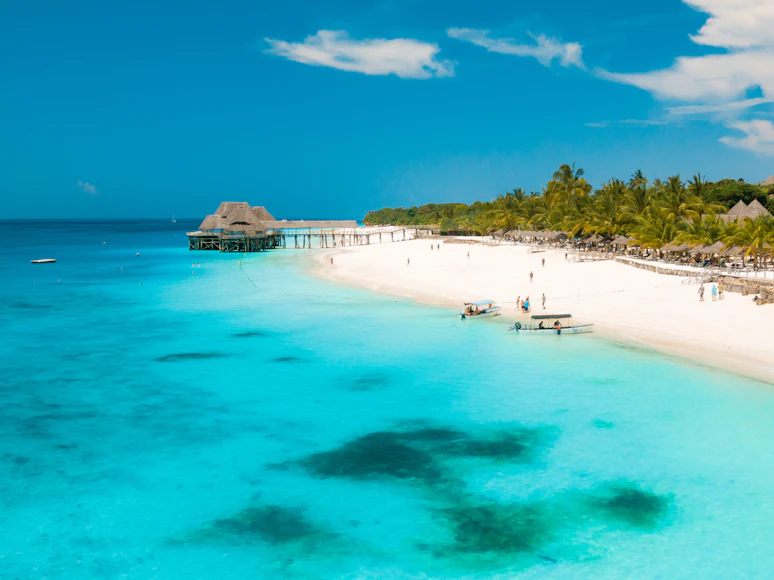
Zanzibar is the most obvious way to add a completely different side of Tanzania to a safari trip. After several days of game drives and early starts, the islands offer beaches, warm Indian Ocean water and a much slower pace.
But I would not treat Zanzibar purely as somewhere to lie on a beach. Stone Town is a historic Swahili trading city whose streets and architecture reflect centuries of interaction between African, Arab, Indian and European cultures.
For a first visit, spending some time in Stone Town before moving to the coast gives you a much better sense of Zanzibar. It also makes the safari-and-island combination feel like two genuinely different parts of Tanzania rather than simply safari followed by a resort.
Mount Kilimanjaro
Kilimanjaro is different from almost everything else on this list because it is not something you casually visit for an afternoon. If you plan to climb it, the mountain becomes one of the central parts of the entire itinerary.
At 5,895 metres, Kilimanjaro is the highest point in Africa. The mountain rises independently above the surrounding plains and passes through several distinct vegetation and climate zones on the way to the summit.
A climb takes several days and altitude is a serious part of the challenge, so it makes sense to choose the route and climbing schedule first. Northern Tanzania is then the easiest place to add a safari before or after the mountain.
Tarangire National Park
Tarangire is sometimes treated as an extra stop on the way to the Serengeti, but it deserves more credit than that. The park has a noticeably different feel, with huge baobab trees, open savannah and particularly strong elephant viewing.
The Tarangire River becomes an important source of water during the dry season, drawing wildlife into the surrounding area. The park covers around 2,850 sq km and is also known for its birdlife and seasonal concentrations of zebra, wildebeest, buffalo and other animals.
Its biggest practical advantage is location. Tarangire fits comfortably into the northern circuit, so adding it to Ngorongoro and the Serengeti gives you more safari variety without creating a difficult itinerary.
Nyerere National Park
Nyerere is one of the strongest reasons to consider southern Tanzania rather than automatically following the classic northern route. The Rufiji River runs through a huge landscape of woodland, floodplains, channels and lakes, creating a very different safari environment.
The river also makes boat safaris possible, which is one of Nyerere’s major advantages. Hippos, crocodiles, elephants and abundant birdlife are found around the river system, while the wider park is also an important refuge for African wild dogs.
Nyerere is not something I would add to a short Serengeti trip just for the sake of seeing another park. It makes more sense as the foundation of a southern Tanzania itinerary, possibly combined with Ruaha.
Ruaha National Park
Ruaha is for travellers who want more wilderness and fewer famous-name stops. At roughly 20,226 sq km, it is Tanzania’s second-largest national park, with the Great Ruaha River running through landscapes of plains, woodland and baobabs.
The park supports elephants, buffalo, lions, leopards, wild dogs and a particularly rich variety of birds. Its remoteness is one of the attractions, but it also means reaching Ruaha requires more planning than simply adding another stop to the northern safari circuit.
For travellers who have already experienced the Serengeti or who simply prefer a quieter safari, Ruaha + Nyerere creates one of Tanzania’s strongest alternative routes.
Mafia Island
Mafia Island offers a very different type of coast from Zanzibar. It is quieter, less developed for mass tourism and particularly attractive if marine life is a major reason for the trip.
The island is known for clear water, diving, coastal biodiversity and seasonal whale-shark experiences. Rather than offering the same mixture of history, restaurants and resort choice as Zanzibar, Mafia is more about the sea and a slower island atmosphere.
For a first Tanzania holiday, Zanzibar will usually be the easier island to combine with safari. Mafia becomes more compelling when diving, snorkelling or marine life are central to the trip.
What should you choose for a first trip?
If this is your first visit and safari is a priority, I would keep the route simple. Serengeti + Ngorongoro + Zanzibar gives you Tanzania’s most famous wildlife areas followed by a completely different coastal experience.
If you want more safari, add Tarangire and spend longer in northern Tanzania rather than trying to cross the country. If trekking is the priority, build the trip around Kilimanjaro and add a shorter northern safari afterwards.
For something less obvious, Nyerere + Ruaha creates a very different southern Tanzania journey. And if the coast matters more than safari, Zanzibar can easily become a major part of the trip rather than simply somewhere you spend the final two nights.
The useful rule is to choose one main region and one contrasting experience. Tanzania has enough depth that trying to fit every famous place into one holiday usually makes the trip worse, not better.
A few easy combinations
First safari + beach: Serengeti → Ngorongoro → Zanzibar
More safari-focused: Tarangire → Ngorongoro → Serengeti
Mountain + wildlife: Kilimanjaro → northern safari
Quieter southern safari: Nyerere → Ruaha
Marine-focused trip: Mafia Island, or Zanzibar with more time devoted to the coast
Related guides
Best Time to Visit Tanzania
Tanzania Travel Costs
Getting to and Around Tanzania
7 Days in Tanzania: A First-Time Itinerary (coming later)