The island is small, dry and relatively flat, but within a few days you can float in an old salt crater, see lemon sharks in shallow water, watch the Atlantic crash into volcanic rock, try kitesurfing and spend an evening around Santa Maria's pier.
For a first visit, one full day exploring the island plus time for the beach and watersports is enough to see most of Sal's highlights.
These are the experiences I'd prioritise.
Best things to do in Sal at a glance
| Experience | Best for | Time needed |
|---|---|---|
| Pedra de Lume salt crater | Sal's most distinctive sight | 1–2 hours |
| Buracona & Blue Eye | Volcanic scenery | Around 1 hour |
| Shark Bay | Wildlife | Around 1 hour |
| Santa Maria | Food, atmosphere and beach | Half/full day |
| Kitesurfing at Kite Beach | Watersports | Half day+ |
| Murdeira Bay | Swimming and quieter scenery | 1–2 hours |
| Palmeira | Local fishing-town atmosphere | 1 hour |
| Island tour | Seeing several sights efficiently | Full day |
| Boat or snorkelling trip | Time on the water | Half day |
| Turtle watching | Seasonal wildlife | Evening |
1. Float in the Pedra de Lume salt crater
Best for: Sal's most unusual experience
If you only leave Santa Maria for one attraction, Pedra de Lume should be high on the list.
The former salt works sit inside an extinct volcanic crater on the east of the island.
Sal's name literally means salt, and the industry played an important role in the island's history. Today, visitors come mainly to see the crater and float in its extremely salty pools.
The density of the water makes floating remarkably easy.
It is one of those experiences that sounds slightly gimmicky until you're actually doing it.
The surrounding landscape is just as interesting: pale salt flats sit inside dark volcanic walls, giving the area a look unlike Sal's resort coast.
Good to know
Bring:
-
swimwear
-
sandals or flip-flops
-
water
-
something you don't mind getting salty
Avoid shaving immediately beforehand — highly saline water and freshly shaved skin are not an enjoyable combination.
Pedra de Lume can easily be combined with Shark Bay because the two are close together.
Meskel pick: If you're doing a one-day island tour, don't skip this one.
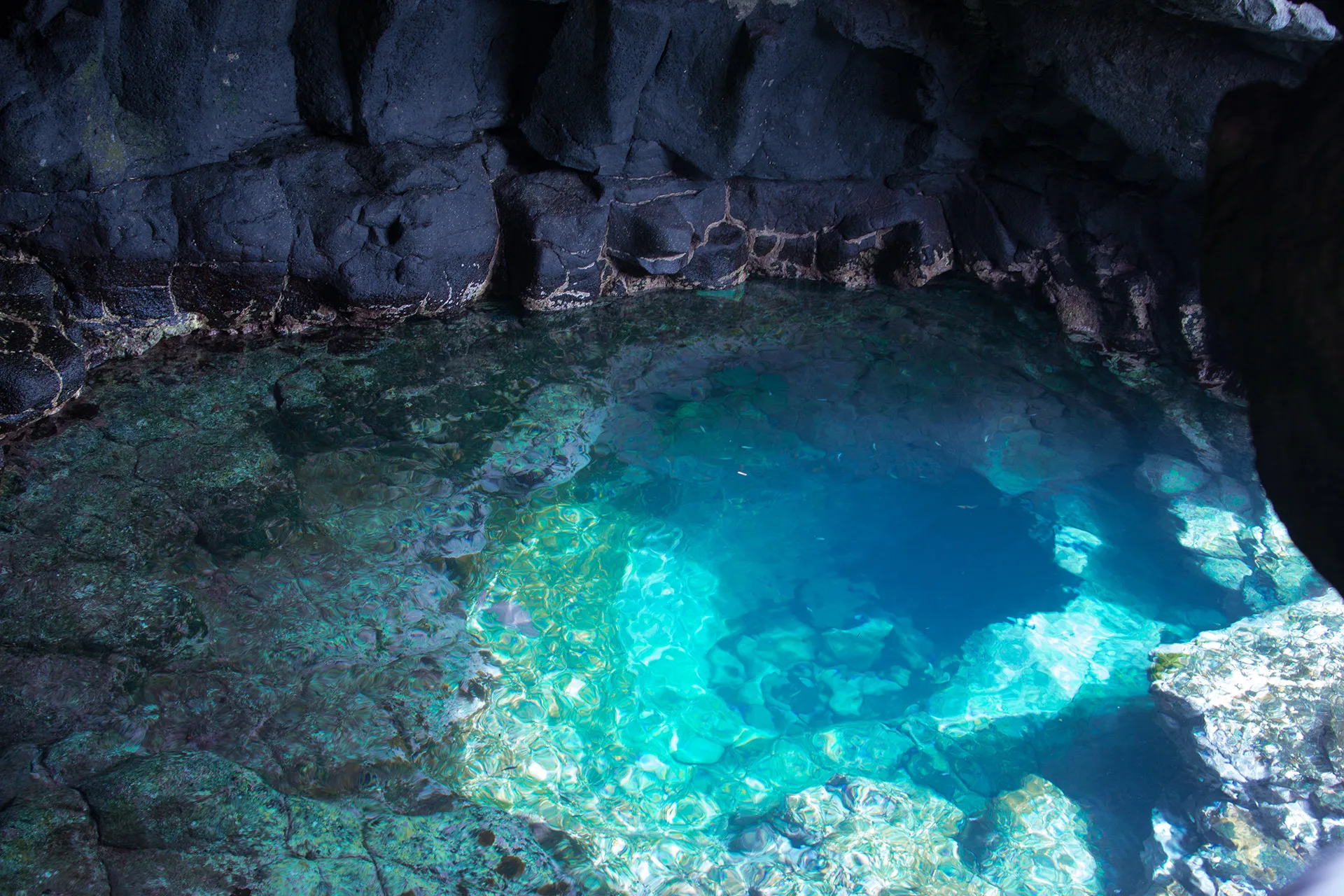
2. See the Blue Eye at Buracona
Best for: volcanic scenery and photography
Buracona sits on Sal's rugged west coast.
The attraction combines black volcanic rock, Atlantic water and a natural underwater opening known as the Blue Eye — Olho Azul.
When the sun is in the right position, light enters the underwater tunnel and produces an intense blue glow.
Cape Verde's tourism authority says the phenomenon is best seen around the middle of the day, when sunlight reaches the opening most directly.
Arrive too early, too late or under heavy cloud and the “eye” may be far less obvious.
Buracona also has a volcanic natural pool, although whether swimming is possible should depend on sea conditions on the day.
Don't treat the pool like a guaranteed swimming spot. Atlantic conditions can change quickly.
Meskel tip: Visit for the landscape first. Consider the Blue Eye a bonus created by the right light rather than something guaranteed to look exactly like photographs.
3. See lemon sharks at Shark Bay
Best for: wildlife
On Sal's north-eastern coast, near Pedra de Lume, Shark Bay — Baía da Parda — is known for its lemon sharks.
The lagoon is shallow, with volcanic rock beneath the water, and juvenile lemon sharks can often be seen moving through the area.
Cape Verde's official tourism site identifies it as the principal place on Sal to observe lemon sharks in their natural environment.
Visitors commonly enter the shallow water with a local guide to see them more closely.
The rocky seabed means suitable water shoes are useful.
Is Shark Bay worth visiting?
Yes, particularly if you've never seen sharks in the wild.
But keep expectations realistic.
This isn't a dramatic shark-diving experience.
The appeal is seeing the animals in shallow natural water, often surprisingly close to shore.
As with any wildlife experience, sightings and behaviour cannot be guaranteed.
4. Spend time in Santa Maria
Best for: beach, restaurants and atmosphere
Most visitors stay in or around Santa Maria, but don't treat it purely as somewhere to sleep between excursions.
The town is one of Sal's most enjoyable places to spend time.
Walk along the beach, explore the streets around the centre, have lunch or dinner locally and visit the pier when fishing boats return.
Santa Maria's pier remains an active part of town life rather than simply a tourist attraction.
You'll often see fishermen landing their catch while vendors and residents gather around the waterfront.
Then there is the beach itself.
Santa Maria Beach is Sal's best all-round beach for most travellers, particularly if swimming and easy access to restaurants matter.
Read: [Best Beaches in Sal, Cape Verde]
Best time to walk around
Late afternoon works particularly well.
Spend the day at the beach, walk through town and stay for dinner rather than treating Santa Maria as a quick sightseeing stop.
5. Try kitesurfing at Kite Beach
Best for: adventure and watersports
Sal is one of Cape Verde's major watersports destinations.
Its trade winds make the island particularly good for:
-
kitesurfing
-
windsurfing
-
surfing
-
wingfoiling
And Kite Beach, east of Santa Maria, is the obvious place to see why.
You don't need previous experience.
Schools around Sal offer beginner lessons as well as equipment rental and coaching for experienced riders.
The main wind season generally runs through the winter and spring months, when conditions become particularly attractive for kitesurfing and windsurfing. Cape Verde's tourism authority highlights Sal's consistent trade winds and Kite Beach for both beginners and experienced riders.
If you have no interest in learning, the beach is still worth seeing when conditions are busy.
Watching dozens of kites move across the water is an experience in itself.
6. Explore Sal on an island tour
Best for: first-time visitors
Sal is compact enough that many of its principal sights can be combined into one day.
A typical island route might include:
Santa Maria → Murdeira → Palmeira → Buracona → Terra Boa → Espargos → Pedra de Lume → Shark Bay
Exact routes vary between operators.
You can do this with:
-
an organised group tour
-
private driver
-
hire car
-
4x4 excursion
For most first-time visitors, a full-day island tour is probably the most efficient option.
You see the main sights once and then spend the rest of the holiday doing what Sal does best: beach, sea and a slower pace.
What about buggy and quad tours?
They're widely offered around Sal and can be fun if you're specifically interested in off-road driving.
But I wouldn't consider them essential.
If you do one, check exactly what your travel insurance covers. Current UK travel advice notes that quad biking may be classified as an extreme sport, and helmets are legally required.
7. Stop in Palmeira
Best for: seeing a less resort-focused side of Sal
Palmeira is a fishing and port town on Sal's west coast.
It is not a destination I'd dedicate an entire day to, but it's worth stopping when exploring the island.
The contrast with Santa Maria is the point.
Sal's tourism economy can make the southern resorts feel somewhat detached from everyday island life. Palmeira gives you a different perspective.
Walk around the harbour, watch fishing activity and combine the stop with nearby Buracona.
Cape Verde's official tourism authority lists Palmeira's fishing village among Sal's cultural attractions.
8. Swim or snorkel around Murdeira Bay
Best for: a quieter afternoon
Murdeira sits on Sal's west coast roughly between Santa Maria and the island's northern settlements.
Its protected bay is generally quieter than the exposed ocean coastline and is one of Sal's better areas for swimming and snorkelling.
The wider Murdeira Bay and Monte Leão reserve is also important for marine life.
Cape Verde's tourism authority notes turtles in the area and seasonal whale activity, particularly around March to May.
Murdeira works particularly well as a stop during an island tour.
You get sea views and a slower atmosphere without committing another entire beach day.
9. Take a boat or snorkelling trip
Best for: seeing Sal from the water
Sal's coastline lends itself naturally to boat trips.
From Santa Maria and elsewhere on the island, you'll find excursions offering combinations of:
-
sailing
-
snorkelling
-
fishing
-
coastal sightseeing
-
wildlife watching
Cape Verde's tourism authority lists boat trips, sport fishing, snorkelling, paddleboarding and marine-animal watching among Sal's established activities.
The exact experience varies enormously by operator.
A small snorkelling boat and a large party catamaran may both be marketed as a “boat tour”, so check what you're actually booking.
If snorkelling is the priority, choose an excursion built around time in the water rather than entertainment onboard.
10. Go turtle watching in season
Best for: wildlife
Cape Verde is an important nesting area for loggerhead sea turtles.
On Sal, nesting occurs on beaches including stretches around Serra Negra, Kite Beach and Algodoeiro.
Cape Verde's tourism authority gives the main turtle period broadly as July to October, although exact nesting and hatching timing varies through the season.
Guided evening excursions are available during the nesting period.
If you go, choose a responsible operator that follows wildlife rules.
That means avoiding unnecessary disturbance, bright lights, touching turtles or interfering with nesting.
This is one experience where responsible behaviour matters more than getting the perfect photograph.
Is Espargos worth visiting?
Espargos is Sal's administrative capital and sits near the centre of the island.
It feels considerably more local and functional than Santa Maria. Most travellers will pass through or stop briefly during an island tour rather than make a separate journey specifically for sightseeing.
Not every place needs to be turned into an attraction.
If you're interested in seeing more everyday life on Sal beyond the resorts, it's worth including.
If you only have two or three days and primarily want beaches and natural attractions, it isn't essential.
What about Terra Boa and the mirage?
Terra Boa often appears on organised Sal island tours.
The dry landscape can create a mirage effect, particularly under suitable heat and light conditions, making the horizon appear to contain water.
It's mildly interesting rather than a reason to travel to Sal.
If your island tour stops there, have a look.
I wouldn't organise an excursion specifically around it.
That distinction matters because many Sal “top things to do” lists give every tour stop equal weight.
How many days do you need for Sal?
For most travellers:
3 days gives you enough time for Santa Maria, one island tour and some beach time.
5–7 days works better if you want a relaxed beach holiday alongside excursions and watersports.
Beyond a week, whether Sal makes sense depends heavily on how much you enjoy resort-style beach travel.
Travellers who want more hiking, towns and dramatic mountain scenery should consider combining Sal with another Cape Verde island.
Read: [Sal: A Complete Travel Guide]
What should you prioritise if you only have one day?
If I had one free day away from Santa Maria, I'd combine:
Pedra de Lume
↓
Shark Bay
↓
Espargos / Terra Boa
↓
Buracona
↓
Palmeira
↓
Murdeira
The exact order isn't particularly important.
The aim is to use one day to see Sal's interior, volcanic coastline and salt-mining history.
Then keep Santa Maria, the beach and watersports for separate days.
Are Sal's attractions worth it?
Yes, Sal isn't an island packed with museums, historic monuments and dozens of major attractions.
Its appeal is simpler:
sea, beaches, unusual volcanic landscapes, watersports and an easy-going climate.
Pedra de Lume and Buracona are genuinely distinctive.
Shark Bay is unusual.
Santa Maria is enjoyable.
And Sal's watersports scene is one of the strongest reasons to choose the island.
But you do not need seven consecutive days of sightseeing.
That is not what Sal does best.
The Meskel take
Don't try to turn Sal into a sightseeing destination that it isn't.
Spend one day exploring the island properly.
Make time for Pedra de Lume, Buracona and Shark Bay.
Then slow down.
Swim at Santa Maria, try a watersport, eat locally, watch activity around the pier and enjoy the reason most people come to Sal in the first place: being beside the Atlantic with very little you actually need to do.
Continue planning your trip to Sal
Sal: A Complete Travel Guide
Start with the full overview of the island, including where to stay, transport, costs and how many days you need.
Best Beaches in Sal
Compare Santa Maria, Kite Beach, Ponta Preta, Murdeira and Sal's quieter stretches of coastline.
Where to Stay in Sal
Choose between Santa Maria, resort areas and quieter parts of the island.
Best Time to Visit Cape Verde
Plan around the wind, temperature, turtle season and watersports conditions.
How to Get Around Cape Verde
Understand taxis, hire cars, domestic flights and ferries before travelling further around the archipelago.